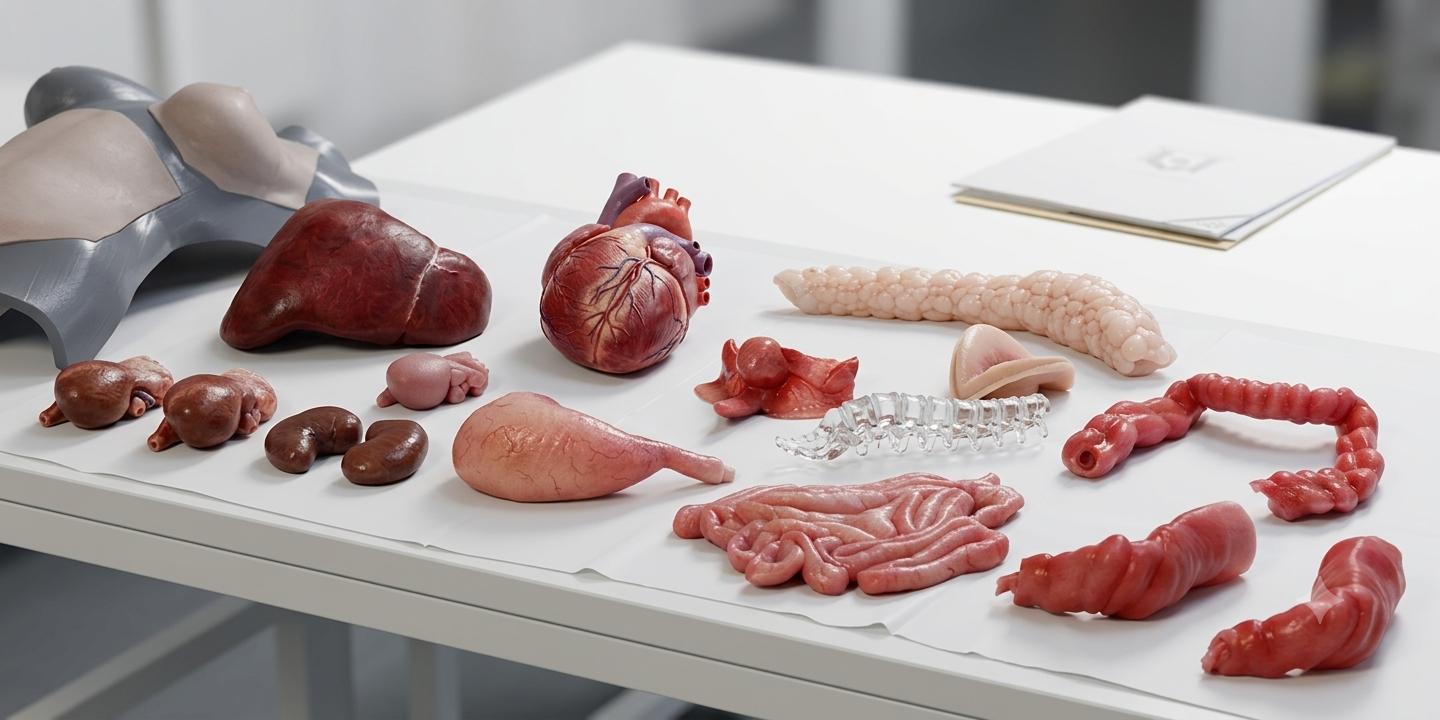
In the field of medical simulations and surgical training, flawless accuracy of synthetic tissues, organs, and anatomical models is critically important. UK-based company AnthroTek, specializing in the production of hyperrealistic artificial skins, surgical simulators, and anatomical replicas, partnered with Photocentric to adapt large-format resin 3D printing technology to transform complex manufacturing processes.
Manufacturing Challenges and Solutions
Models that mimic the behavior of real human tissue require specific silicone castings, which in turn require high-resolution, large-format molds. Small-format desktop printers are often too slow or require splitting molds into multiple parts, thereby losing dimensional accuracy.
By utilizing the Photocentric LC Magna resin (LCD) 3D printer, AnthroTek gained the ability to:
Print large-scale molds for casting: Monolithic molds for silicone casting of organs, synthetic skin, and prosthetics are printed directly from resin.
Ensure continuous production (24/7): Industrial equipment reliability enables mass and uninterrupted production without downtime.
Ensure high surface detail: Resin printing technology provides an extremely smooth surface, which is critically important for silicone products to avoid visible layer lines.
Key Application Areas
Surgical training and simulations: Hyperrealistic models allow surgeons and students to practice complex operations in a safe environment.
Medical device validation and testing: Before new medical devices or implants are used with patients, they are tested on anatomical phantoms.
Robotics and special effects: The technology is also applied in developing robotic systems with biological feedback and realistic prosthetic elements for the film industry.