In the film industry, theater, and entertainment parks, every prop or set piece helps create a unique story. However, as demands for detail precision increase and filming schedules tighten, traditional production methods (clay molding, carving, or CNC milling) often become too slow and expensive.
By employing industrial Photocentric LCD 3D printing, prop masters and designers gain complete freedom to create faster, more accurately, and within budget.
Key Advantages of 3D Printing in Prop Production
Rapid Prototyping and Design Validation:
Engineers and artists can transform computer 3D models into physical objects within hours. This enables quick testing of proportions, ergonomics, and alignment of prop appearance with the director before beginning mass production.
Dual Application: Direct Production or Casting Molds:
Direct printing: Exceptionally detailed hero props are printed directly from rigid, impact-resistant, or flexible resins.
Indirect production (Mold Production): Extremely smooth molds are printed for rapid silicone, foam, or plastic casting when large quantities of identical set pieces are needed.
Realization of Impossible Geometries and Details:
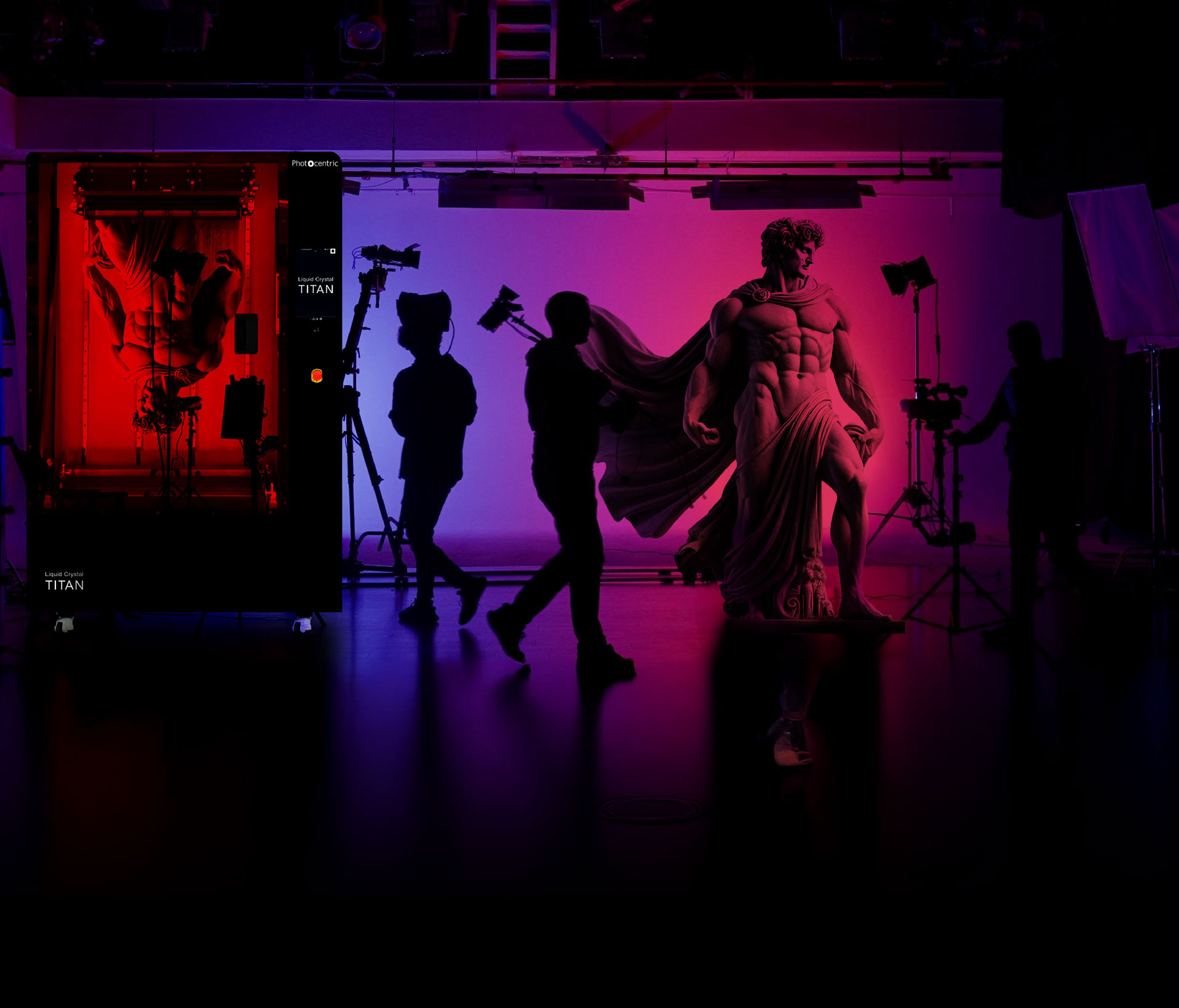
Using large-format printers (such as the 8K resolution LC Titan), it is possible to print highly complex historical replicas, fantastical creature elements, or fantasy weapons with micron-precision textures.
Operational Efficiency and Digital Archiving:
Instead of storing heavy and fragile physical molds, all props are saved in digital CAD files. When an additional prop unit is needed years later, it can be printed with the push of a button.